


- By Ellen
- 15 Jul, 2026
What to Look for in an OEM Makeup Case Factory: A Complete Guide for Brands
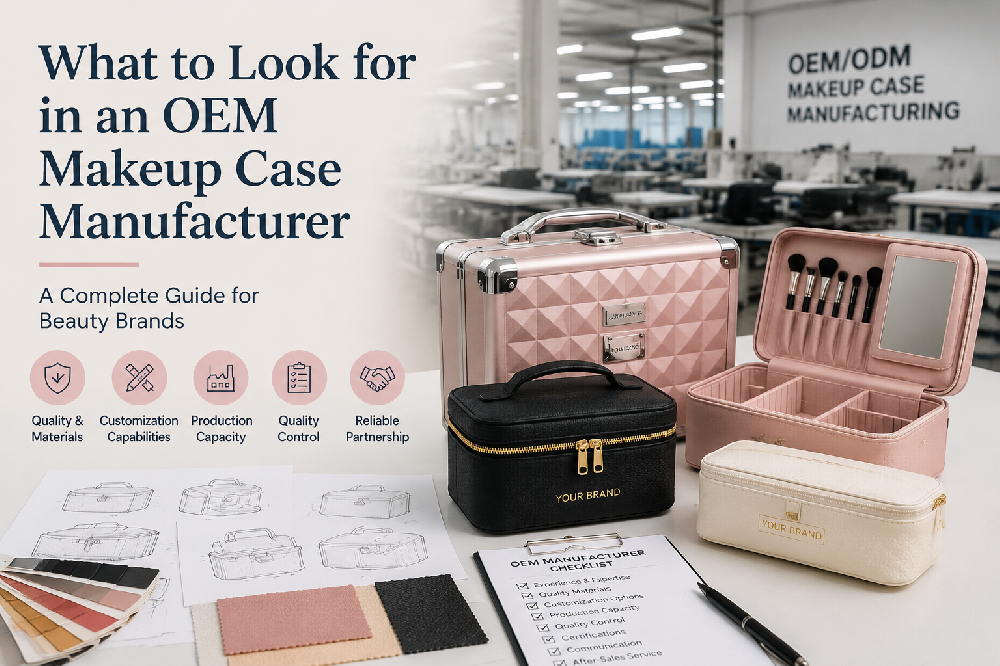
H1: What to Look for in an OEM Makeup Case Manufacturer
The beauty industry is more competitive than ever, and consumers expect products that combine functionality, durability, and premium aesthetics. While cosmetics often take center stage, the quality of the makeup case plays a significant role in shaping customer perception and brand value.
Whether you're launching a new beauty brand, expanding your product line, or looking for a reliable private-label partner, choosing the right OEM makeup case manufacturer is one of the most important decisions you'll make.
In this guide, we'll explore the key factors you should evaluate before selecting an OEM manufacturing partner and how the right supplier can help your brand grow.
H2: Why Choosing the Right OEM Makeup Case Manufacturer Matters
An experienced OEM manufacturer does much more than simply produce products. They become a strategic partner that helps you:
Maintain consistent product quality
Develop unique custom designs
Shorten product development cycles
Improve supply chain efficiency
Control production costs
Meet international compliance standards
A reliable manufacturer allows your team to focus on branding, marketing, and customer acquisition while ensuring every product meets your expectations.
H2: 1. Manufacturing Experience and Industry Expertise
Experience is one of the first indicators of a trustworthy supplier.
Look for manufacturers with several years of experience producing:
Makeup cases
Cosmetic bags
Beauty organizers
Professional makeup storage
Travel cosmetic cases
Experienced manufacturers understand market trends, material performance, production challenges, and quality requirements across different regions.
H3: Questions to Ask
How many years have you been manufacturing makeup cases?
Which international markets do you serve?
Have you worked with beauty brands similar to mine?
H2: 2. Product Quality and Material Selection
The durability of a makeup case depends heavily on its materials and construction.
A professional OEM manufacturer should offer a wide range of premium materials, including:
PU leather
Vegan leather
EVA molded shells
Oxford fabric
Polyester
Nylon
ABS hard shell
Aluminum frames
Pay attention to details such as:
Stitching quality
Waterproof performance
Zipper durability
Handle strength
Interior lining
Foam protection
Reinforced corners
High-quality materials reduce returns and improve customer satisfaction.
H2: 3. Customization Capabilities
Customization is one of the biggest advantages of OEM manufacturing.
A capable manufacturer should provide flexible customization options such as:
H3: Logo Customization
Embossed logos
Printed logos
Metal logo plates
Silicone patches
Woven labels
H3: Appearance Customization
Custom colors
Surface textures
Material selection
Pattern printing
Size adjustments
H3: Interior Customization
Adjustable dividers
Brush holders
Mirror installation
Elastic pockets
Mesh compartments
Foam inserts
The more customization options available, the easier it becomes to create products that reflect your brand identity.
H2: 4. Design and Product Development Support
Not every brand has an in-house product design team.
An experienced OEM makeup case manufacturer should provide design assistance, including:
CAD drawings
3D renderings
Prototype development
Material recommendations
Functional improvements
Strong R&D capabilities can significantly reduce product development time while improving product performance.
H2: 5. Production Capacity and Lead Time
Before placing large orders, evaluate the supplier's production capability.
Important considerations include:
Monthly production capacity
Number of production lines
Skilled workforce
Automated equipment
Average lead time
Peak season capacity
Reliable manufacturers should be able to scale production as your business grows without sacrificing quality.
H2: 6. Quality Control System
Quality consistency is essential for protecting your brand reputation.
Ask about the manufacturer's quality management process.
A professional factory should inspect products throughout every stage of production:
H3: Incoming Material Inspection
Raw materials are checked before entering production.
H3: In-Process Inspection
Production staff monitor workmanship and assembly during manufacturing.
H3: Final Product Inspection
Each finished product is inspected before packaging and shipment.
Many reputable manufacturers also conduct:
Drop tests
Load-bearing tests
Zipper cycle tests
Color fastness tests
Waterproof testing
H2: 7. Certifications and Compliance
If you sell products internationally, your manufacturer should comply with global quality standards.
Common certifications include:
ISO 9001 Quality Management
BSCI Social Compliance
SEDEX
REACH
RoHS (where applicable)
These certifications demonstrate a commitment to quality, ethical manufacturing, and regulatory compliance.
H2: 8. Minimum Order Quantity (MOQ)
MOQ requirements vary significantly between manufacturers.
Choose a supplier whose MOQ aligns with your business stage.
For example:
Startups may prefer lower MOQs for market testing.
Growing brands often prioritize lower unit costs through higher-volume production.
Established retailers usually require large-scale manufacturing capacity.
Flexible MOQ options provide more room for business growth.
H2: 9. Communication and Customer Service
Communication can make or break a manufacturing partnership.
Look for manufacturers that:
Respond quickly
Communicate clearly in English
Provide regular production updates
Offer dedicated account managers
Solve problems proactively
Effective communication minimizes misunderstandings and keeps projects on schedule.
H2: 10. Packaging and Private Label Services
Many OEM manufacturers also offer complete packaging solutions.
Services may include:
Custom gift boxes
Hang tags
Instruction cards
Retail packaging
Barcode labels
Shipping cartons
Private label branding
Integrated packaging services save time and simplify your supply chain.
H2: 11. Pricing vs. Overall Value
The lowest price isn't always the best choice.
Instead of comparing suppliers based solely on unit cost, consider the total value they provide:
Product quality
Customization flexibility
Production reliability
Delivery performance
Technical support
Warranty policies
A slightly higher manufacturing cost often results in fewer defects, stronger customer reviews, and better long-term profitability.
H2: Red Flags to Watch Out For
Not every supplier is a good fit.
Be cautious if a manufacturer:
Cannot provide product samples
Has inconsistent communication
Offers unrealistically low prices
Refuses factory audits
Lacks quality certifications
Cannot explain their quality control process
Has unstable delivery schedules
Identifying these warning signs early can prevent costly mistakes.
H2: Why Long-Term Partnerships Deliver Better Results
The best OEM relationships extend beyond individual purchase orders.
Long-term partnerships often provide benefits such as:
Faster product development
Better pricing over time
Priority production scheduling
Improved quality consistency
Joint innovation opportunities
Stronger supply chain stability
Working closely with one reliable manufacturer creates efficiencies that are difficult to achieve with multiple suppliers.
H2: Final Thoughts
Selecting the right OEM makeup case manufacturer requires careful evaluation of quality, customization capabilities, manufacturing expertise, production capacity, and communication.
Rather than focusing solely on price, choose a manufacturing partner that understands your brand vision and can consistently deliver products that meet your quality standards.
As the beauty market continues to evolve, a dependable OEM partner will help you launch innovative makeup cases faster, strengthen customer loyalty, and build a lasting competitive advantage.
By investing time in choosing the right manufacturer today, you'll create a stronger foundation for your brand's long-term success.