


- By Ellen
- 18 Jul, 2024
How OEM Makeup Case Manufacturing Works: A Complete Guide for Beauty Brands
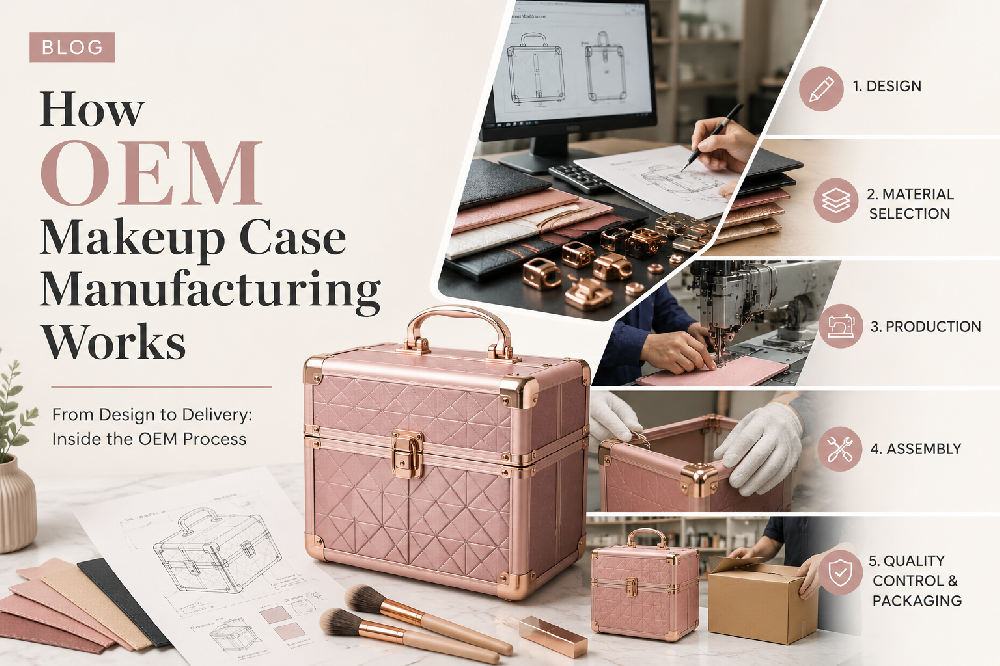
How OEM Makeup Case Manufacturing Works
As the beauty industry continues to expand worldwide, more brands are looking for reliable OEM (Original Equipment Manufacturer) partners to produce high-quality makeup cases. Whether you're launching a new cosmetics brand or expanding your product line, understanding how OEM makeup case manufacturing works can help you make informed decisions and create products that stand out in the market.
In this guide, we'll walk you through the complete OEM manufacturing process, from product development to final delivery.
What Is OEM Makeup Case Manufacturing?
OEM makeup case manufacturing is a business model in which a manufacturer produces makeup cases based on a client's specifications. The customer owns the brand, product design, and marketing, while the manufacturer handles engineering, sourcing, production, and quality control.
This approach allows beauty brands to offer customized products without investing in their own manufacturing facilities.
Step 1: Product Consultation
The OEM process starts with a detailed consultation between the customer and the manufacturer.
During this stage, both parties discuss:
Product dimensions
Target market
Case style
Interior layout
Material selection
Logo customization
Packaging requirements
Estimated order quantity
A professional manufacturer will also provide suggestions to improve functionality and reduce production costs.
Step 2: Design and Engineering
After confirming the product requirements, the engineering team creates technical drawings or 3D designs.
Customers can customize almost every detail, including:
Aluminum frame or ABS shell
PU leather or fabric exterior
EVA foam inserts
Dividers and trays
Locks and handles
Wheels and telescopic handles
Interior colors
Custom logo printing
Design approval is required before moving to sample production.
Step 3: Prototype Development
A prototype or sample is produced for evaluation.
The sample allows customers to verify:
Product appearance
Material quality
Size accuracy
Interior functionality
Logo placement
Structural durability
Necessary adjustments can be made before mass production begins.
Step 4: Material Procurement
Once the sample is approved, the manufacturer sources all necessary materials.
Common materials include:
Aluminum profiles
ABS panels
MDF boards
EVA foam
Velvet lining
PU leather
Metal hinges
Locks
Handles
Wheels
Rivets and accessories
Reliable suppliers ensure consistent product quality throughout production.
Step 5: Mass Production
Mass production typically includes several manufacturing stages:
Frame Fabrication
Aluminum frames are cut, bent, and assembled to create the case structure.
Panel Assembly
Exterior panels are attached securely to the frame.
Interior Installation
Foam inserts, trays, dividers, mirrors, and storage compartments are installed according to the approved design.
Hardware Installation
Locks, handles, hinges, corner protectors, and wheels are mounted and tested.
Each production step follows strict quality standards to maintain consistency.
Step 6: Quality Control
Quality inspection is one of the most important stages in OEM manufacturing.
Manufacturers generally perform:
Appearance inspection
Dimension verification
Weight check
Load-bearing test
Handle strength test
Lock function test
Drop test
Packaging inspection
Professional factories often conduct both in-process inspections and final random inspections before shipment.
Step 7: Logo and Branding
OEM manufacturing allows complete brand customization.
Popular branding methods include:
Silk screen printing
UV printing
Metal logo plates
Embossed leather logos
Laser engraving
Custom packaging such as gift boxes, color boxes, cartons, instruction manuals, and barcode labels can also be produced.
Step 8: Packaging and Shipping
After passing quality inspection, products are carefully packaged to prevent damage during transportation.
Shipping options include:
Sea freight
Air freight
Railway transport
Express courier
Manufacturers usually support FOB, CIF, EXW, and DDP trade terms depending on customer requirements.
Benefits of OEM Makeup Case Manufacturing
Partnering with an experienced OEM manufacturer offers several advantages:
Lower production costs
Professional product development
Flexible customization
Stable product quality
Faster time to market
Scalable production capacity
Global shipping support
OEM manufacturing enables beauty brands to focus on marketing and sales while leaving production to experienced specialists.
How to Choose the Right OEM Makeup Case Manufacturer
When selecting an OEM supplier, consider the following factors:
Manufacturing experience
Production capacity
Quality certifications
Design and R&D capabilities
Material sourcing
Quality control system
Customization options
Communication efficiency
Delivery reliability
Export experience
Requesting samples before placing bulk orders is always recommended.
Final Thoughts
OEM makeup case manufacturing provides beauty brands with a cost-effective way to develop premium, customized products without building their own factory. From product design and material selection to quality inspection and worldwide shipping, every stage plays an important role in delivering a durable and attractive makeup case.
By working with a reliable OEM makeup case manufacturer, businesses can create unique cosmetic storage solutions that reflect their brand identity while meeting customer expectations for quality, functionality, and style.